Water Heater Leak vs. Burst Pipe: How to Tell the Difference
You walk into your basement and your feet hit cold water. Your first reaction is probably something unprintable. Your second is: where is this coming from? That question matters a lot, because a water heater leak and a burst pipe behave differently, cause different kinds of damage, and require different fixes. Knowing which one you’re dealing with helps you act faster and smarter. At RestoreNow, we’ve helped homeowners all across the South Shore sort through exactly this kind of chaos, and the difference is almost always easier to spot than people think. If you find yourself in the middle of it, our water damage restoration team is ready to help around the clock.
Let’s break this down so you know exactly what to look for.
Not sure what you’re dealing with? We are.
Our team responds in 30 to 60 minutes and can assess the damage, coordinate emergency services with our trusted partners, and get your restoration moving fast.
Signs It’s a Water Heater Leak
Water heater leaks tend to announce themselves in a pretty specific way. The water is usually contained to the area around the unit itself, most often in a utility room, basement corner, or dedicated closet. Here’s what you’ll typically notice:
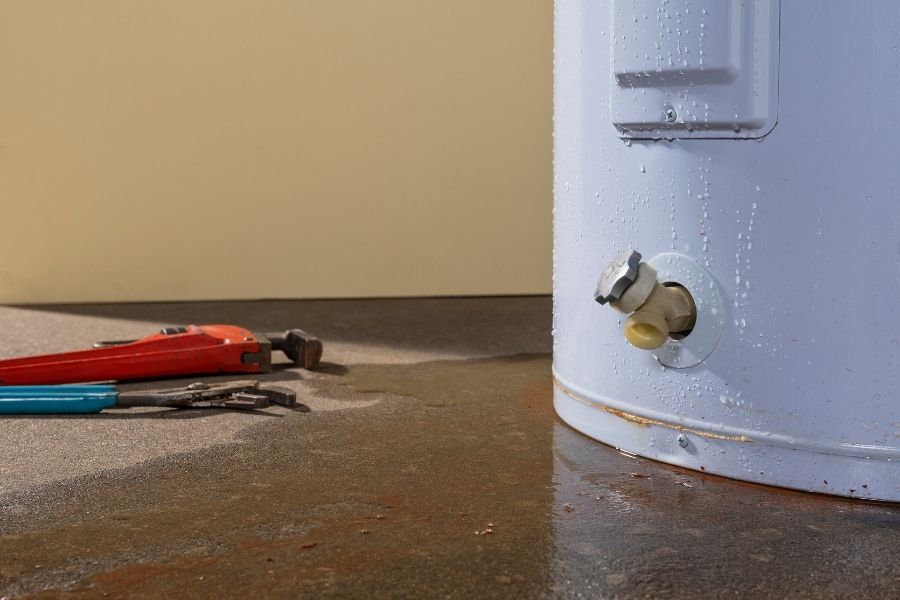
Water pooling directly under or around the water heater is one of the clearest indicators of a water heater source leak.
- Water is pooled directly beneath or around the water heater tank
- There’s visible rust, corrosion, or mineral buildup on the tank or fittings
- The leak is slow and steady rather than sudden or forceful
- Your hot water runs out faster than usual or has discoloration
- You notice a sulfur or metallic smell near the unit
- The pressure relief valve (T&P valve) is dripping or has water stains below it
Most water heater leaks originate from a few common spots: the inlet and outlet connections at the top, the drain valve at the bottom, or the tank itself if it’s corroded from the inside. An older tank, typically one past the 8 to 12 year mark, is far more likely to develop a slow internal leak. According to the U.S. Department of Energy, most conventional storage water heaters have a lifespan of 10 to 15 years, so age is a major factor when you’re diagnosing the source.
Signs It’s a Burst Pipe
Burst pipes are a different animal. They’re louder, messier, and the water spreads fast. In Massachusetts, frozen pipes are one of the most common culprits between December and March, when temperatures drop hard and quickly. But pipes also burst from age, corrosion, or pressure spikes. Here’s what to look for:
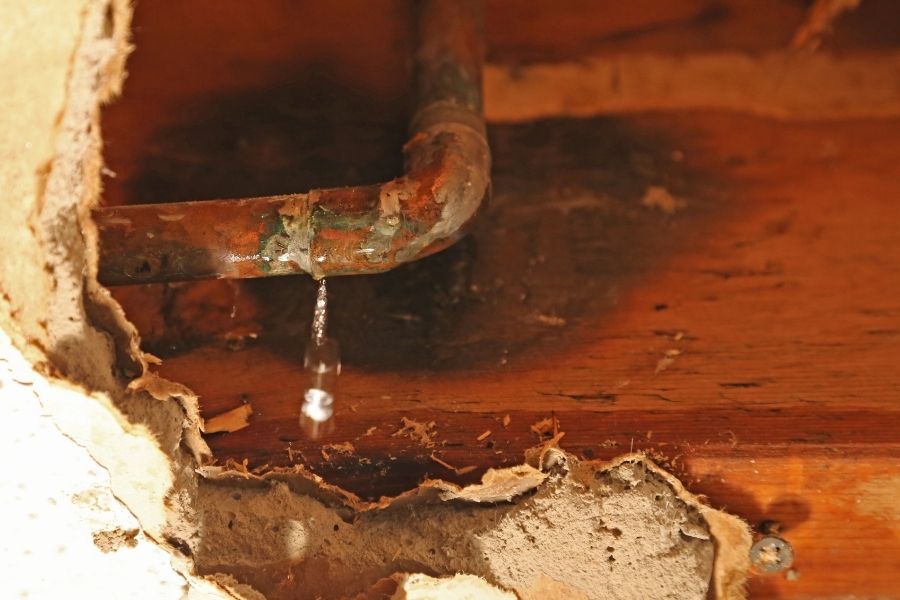
Burst pipes often cause rapid, widespread water spread across floors, walls, and ceilings far from the actual break point.
- Water is spreading quickly across floors or dripping from ceilings
- The leak source isn’t near any appliance
- You hear a sudden rushing, banging, or hissing sound before noticing water
- Water pressure has dropped noticeably at your faucets
- Walls or ceilings show bulging, bubbling paint, or soft spots
- You’ve had a hard freeze recently and temperatures just warmed up
Burst pipes are an emergency. The longer water runs before the supply is shut off, the more it soaks into walls, subflooring, and insulation. We’ve seen cases where a single overnight pipe burst caused damage through two floors of a home. If you haven’t already, read our guide on frozen pipe prevention for Hanover homeowners before winter to avoid this entirely.
Water Heater Leak vs. Burst Pipe: Side-by-Side
| Feature | Water Heater Leak | Burst Pipe |
|---|---|---|
| Speed of water spread | Slow and localized | Fast and widespread |
| Location of water | Near the water heater only | Away from appliances; in walls, floors, ceilings |
| Pressure drop at faucets | Usually not noticeable | Often significant |
| Common cause | Aging tank, loose fittings, valve failure | Freezing, corrosion, pressure surge |
| Sound clues | Hissing or dripping near tank | Sudden bang, rush, or silence if frozen |
| Urgency level | High, but usually not immediate crisis | Emergency, shut off water immediately |
How to Tell the Difference: A Quick Checklist
When you walk into a flooded area, try to stay calm and run through this mental checklist. It takes about 60 seconds and helps you communicate clearly with anyone you call for help.
Quick Identification Checklist
- Where is the water? Pooled under the water heater = likely a heater issue. Spreading across floors or coming from walls = likely a pipe.
- Is hot water supply affected? No hot water or discolored water often points to the tank.
- Did you hear anything? A sudden bang or rushing sound before water appeared suggests a pipe failure.
- Check your water pressure. Turn on a faucet. Major pressure loss = burst pipe somewhere in the system.
- Is there visible pipe damage? Look for cracked, split, or damp pipe sections in exposed areas.
- What’s the weather been like? A hard freeze followed by a warm-up is a classic burst pipe scenario.
Still not sure? That’s okay. This is exactly what our team is here for. Here’s what to do first after finding water damage in your home, whether you’ve identified the source or not.
What to Do After You’ve Identified the Source
If It’s a Water Heater Leak
Turn off the power or gas supply to the unit first. Then shut off the cold water inlet valve at the top of the tank. This stops the flow. If the leak is minor and limited to fittings or the drain valve, a licensed plumber can often address it quickly. If the tank itself is leaking from the body, it’s likely time for a replacement.
Even a slow heater leak can saturate the surrounding flooring, drywall, and base materials if it’s gone unnoticed for days or weeks. That kind of hidden moisture creates conditions for structural damage over time. The EPA notes that mold can begin growing within 24 to 48 hours in wet conditions, which is why addressing any water intrusion quickly matters so much.
If It’s a Burst Pipe
Locate your main water shutoff valve and turn it off immediately. Every minute the water runs, it’s spreading further into materials you can’t see. Once the water supply is off, call a licensed plumber to repair or replace the pipe.
After the source is handled, the real work begins: assessing and restoring what the water damaged. That’s where RestoreNow comes in. We coordinate with our trusted partners to oversee the emergency mitigation process, including water extraction and structural drying. Then our team handles all the restoration work that follows, from replacing damaged drywall to full property reconstruction if needed.
We also help take the insurance headache off your plate. We document everything thoroughly and provide the detailed estimates your insurance company needs to move the claim forward. Learn more about what water damage repairs typically cost in Massachusetts so you’re going into the claims process with realistic expectations.
Dealing with water damage in the South Shore area?
RestoreNow responds in 30 to 60 minutes. We handle the coordination, the cleanup, and the rebuild, from start to finish.
Frequently Asked Questions
Can a water heater leak look like a burst pipe?
They can look similar at first, especially if a water heater leak has been running for a while and spread across the floor. The key difference is location. A water heater leak is always traced back to the unit itself, while a burst pipe introduces water from a plumbing line, often at a point completely unrelated to any appliance.
How do I know if the water is from a hot or cold pipe?
Feel the floor or surface where the water is pooling. Warm or hot water pooling in a basement or utility area often indicates a water heater connection failure or a hot water supply line break. Cold water pooling anywhere else in the home, especially after a freeze, points more strongly to a cold supply line burst.
Should I wait to call a restoration company after a burst pipe?
No. The sooner you call, the better. Water spreads into walls, subfloors, and insulation faster than most people expect. Within 24 to 48 hours, the risk of secondary damage including mold growth increases significantly. A restoration company can coordinate emergency drying services and assess the full scope of the damage right away.
Does homeowners insurance cover burst pipe damage or water heater leaks?
Coverage depends on your specific policy and the circumstances of the damage. Sudden, accidental burst pipe damage is often covered under standard homeowners insurance. Gradual water heater leaks that were left unaddressed may not be. Thorough documentation of the damage and a detailed estimate of repair costs are critical to supporting your claim. You can also visit our South Shore service area page to learn more about how we serve homeowners throughout the region.