
Weather Events & Cat Claims: What Changes When Disaster Hits?
Jump To:
A massive storm just tore through your neighborhood. Your basement’s flooded, your roof’s damaged, and you’re ready to file a claim. But something’s different this time. Your insurance company tells you this is a “CAT claim.” What does that mean for you?
At RestoreNow, we’ve helped countless South Shore homeowners navigate the complexities of catastrophe claims after major weather events. When disaster hits your Hanover, Marshfield, or Rockland home, understanding how CAT claims work can help you get the restoration and reconstruction services you need faster. Let’s break down what changes when weather events trigger special claims handling.
What Are CAT Claims?
CAT claims are insurance claims filed after a catastrophic event affects multiple properties in an area. Think hurricanes, severe storms, flooding, or major winter weather. When dozens or hundreds of homes get damaged simultaneously, insurance companies declare a CAT event and handle things differently.
The main difference? Volume. Regular claims involve one house at a time. CAT claims involve entire neighborhoods, sometimes entire regions. Insurance companies bring in extra adjusters, set up temporary claims centers, and follow special protocols to handle the surge.

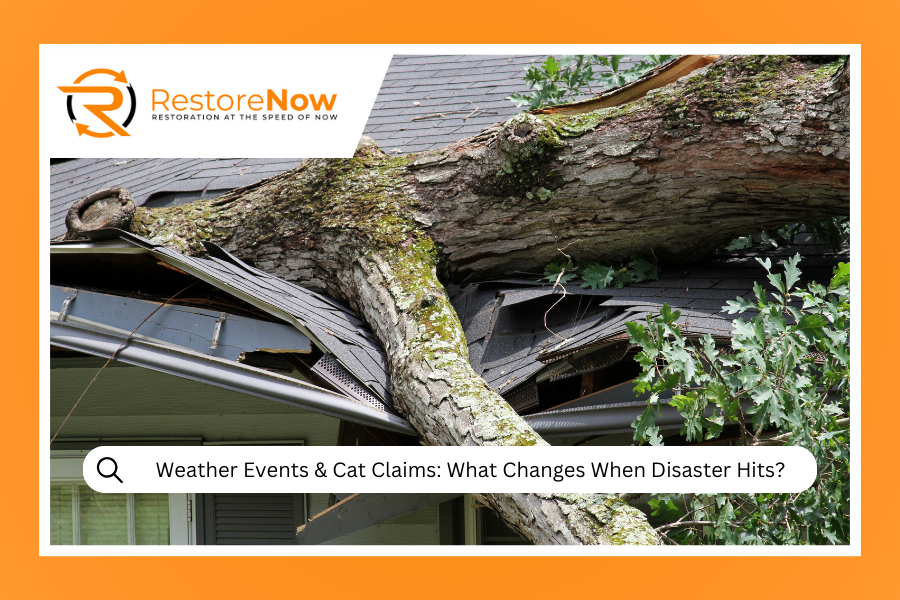
Roof damage from catastrophic weather events often triggers CAT claim designation when multiple properties are affected.
Storm Damage Your Home?
We coordinate emergency response and handle all restoration work after disaster strikes.
When Weather Triggers CAT Designation
Not every storm becomes a CAT event. Insurance companies look at specific factors before declaring catastrophe status. Here’s what typically triggers the designation:
Number of Claims in an Area
When a single weather event generates 50 or more claims in a concentrated geographic area, companies often activate CAT protocols. Some insurers set the threshold higher, at 100 or 250 claims. The exact number varies by company policy.
Severity of Damage
Major hurricanes automatically trigger CAT designation. But smaller events can too if damage is widespread. That March ice storm that knocked out power for a week and caused frozen pipes across the South Shore? Probably a CAT event.
Official Disaster Declarations
When FEMA declares a federal disaster area or the state governor declares an emergency, insurance companies typically follow suit with CAT designation. FEMA’s disaster declaration process helps standardize this response.
| Weather Event Type | Common CAT Triggers | Typical Damage |
|---|---|---|
| Hurricane/Tropical Storm | Wind over 74 mph, widespread flooding | Roof damage, flooding, structural issues |
| Severe Winter Storm | Heavy snow, ice accumulation, extended power loss | Frozen pipes, roof collapse, ice dams |
| Nor’easter | High winds, coastal flooding, heavy precipitation | Flooding, wind damage, erosion |
| Severe Thunderstorms | Hail, lightning strikes, microbursts | Hail damage, fire from lightning, localized flooding |
How the Claims Process Changes
CAT claims follow different rules. Here’s what changes when your regular claim becomes a catastrophe claim.
Adjuster Assignment Takes Longer
Your insurance company brings in extra adjusters from other states. These CAT adjusters travel to affected areas to handle the surge. You might wait days or even weeks for an inspection instead of the usual 24 to 48 hours.
The adjuster assigned to your case may not be familiar with local building codes or typical South Shore construction. They’re doing their best, but they’re working in unfamiliar territory with an overwhelming caseload.
Processing Timelines Extend
Normal claims get processed in two to four weeks. CAT claims can take two to three months or longer. The sheer volume of claims creates bottlenecks at every stage from inspection to approval to payment.
Emergency Mitigation Gets Priority
Insurance companies focus first on preventing additional damage. If you’ve got a hole in your roof or standing water in your basement, those emergency mitigation needs move to the front of the line. Structural restoration and full reconstruction come later in the process.
This is where we coordinate with our trusted partners to oversee emergency mitigation, then RestoreNow handles the complete water damage restoration work that follows.
Thorough documentation becomes even more critical during CAT claim events when adjusters are overwhelmed.
Why Documentation Matters More
Documentation always matters for insurance claims. But during CAT events, it becomes absolutely critical. Here’s why.
Overwhelmed Adjusters Miss Things
CAT adjusters are inspecting dozens of properties daily. They’re rushed, tired, and working under pressure. They might miss damage that you’ll discover later. Detailed photos and notes protect you if additional damage surfaces after the initial inspection.
Proving Pre-Existing Damage
Was that crack in your foundation there before the storm? During CAT events, insurance companies scrutinize claims more carefully. They’re looking for pre-existing conditions to exclude from coverage. Your documentation proves what’s new damage versus what was already there.
Supporting Your Restoration Scope
We make the process easier by thoroughly documenting the damage, preparing detailed estimates, and providing the information your insurance company needs to move the claim forward. We know what insurers look for, and we make sure the scope of work we propose matches the repairs that are actually needed.
Documentation Checklist for CAT Claims:
- Take photos immediately after damage occurs (before any cleanup)
- Document every damaged room from multiple angles
- Photograph damage to belongings and structural elements
- Keep receipts for emergency repairs and temporary housing
- Save all communication with your insurance company
- Document the date and time damage occurred if possible
- Take video walkthroughs showing the full extent of damage
What to Expect During CAT Events
Let’s talk reality. CAT claims are frustrating. You’re dealing with property damage, and the claims process moves slower than usual. Here’s what typically happens.
Communication Delays
Your insurance company’s phone lines are jammed. Their adjusters are swamped. Getting answers takes longer than normal. Expect delays in callbacks, email responses, and claim updates. This doesn’t mean your claim isn’t being processed; it just means everyone’s capacity is maxed out.
Contractor Shortages
Good contractors get booked solid fast. When 500 homes need repairs, there aren’t enough qualified crews to handle everything immediately. We’ve been serving the South Shore for years, which means we’ve built relationships with trusted partners who can respond even during high-demand periods.
Material Availability Issues
After major storms, building materials run short. That specific shingle color you need? Might be backordered for weeks. Drywall, lumber, and other basics can become scarce when everyone needs them simultaneously. Plan for possible substitutions or delays.
Price Fluctuations
Supply and demand affects pricing during CAT events. Some contractors inflate prices when demand spikes. We maintain consistent pricing and work directly with your insurer to ensure the estimate reflects fair market rates for the repairs needed.
How RestoreNow Helps Navigate CAT Claims
We’ve guided South Shore homeowners through the CAT claims process after major storms, hurricanes, and severe winter weather. Our approach focuses on making a complicated process manageable.
Rapid Response Coordination
When disaster strikes, we respond within 30 to 60 minutes to coordinate emergency services. With our trusted partners, we oversee immediate mitigation needs like weather-related water damage extraction and emergency drying. This quick response prevents additional damage and strengthens your claim.
Comprehensive Damage Documentation
We take that administrative burden off your shoulders. Our team documents everything: photos from every angle, detailed measurements, moisture readings, affected materials, and structural concerns. This documentation package gives your adjuster the complete picture and supports your claim.
Insurance-Ready Estimates
We know what insurers look for in estimates. Our detailed scope of work breaks down every repair needed, explains why it’s necessary, and prices it according to industry standards. This reduces back-and-forth with adjusters and speeds up approval.
Complete Restoration Services
After emergency mitigation is complete, RestoreNow handles all structural restoration and reconstruction work. From basement restoration to ceiling repairs to complete rebuilds, we manage the entire project from start to finish.
You get a single point of contact instead of juggling multiple contractors. We coordinate with your insurance company, handle the paperwork, and keep you updated throughout the restoration process. Learn more about our water damage repair costs and what to expect.
Dealing with Storm Damage?
Our team at RestoreNow responds 24/7 to coordinate emergency services and handle complete restoration.
Managing Timeline Expectations
We’re honest about timelines during CAT events. If your adjuster is running two weeks behind, we tell you. If materials are backordered, we discuss alternatives. We keep you informed so there are no surprises.
Quality Restoration Work
CAT events put pressure on everyone to work faster. We don’t compromise quality to meet arbitrary deadlines. Your home gets restored correctly, using proper techniques and materials. Whether it’s winter water damage from frozen pipes or hurricane damage to your structure, we do it right.
Frequently Asked Questions
How long does a CAT claim take compared to a regular claim?
Regular insurance claims typically process in two to four weeks from inspection to settlement. CAT claims can take two to three months or longer due to the volume of claims being processed simultaneously. Timeline depends on damage severity, adjuster availability, and how quickly you provide required documentation.
Will my premium increase after filing a CAT claim?
Insurance companies typically don’t raise premiums solely for CAT claims since catastrophic events affect many policyholders at once and aren’t tied to individual risk factors. However, your rates may still increase at renewal due to the insurer’s overall losses from the catastrophic event. Check your policy and speak with your agent about specific impacts.
Can I hire my own contractor during a CAT event, or do I have to use the insurer’s preferred vendor?
You have the right to choose your own contractor. Your insurance company may suggest preferred vendors, but you’re not required to use them. RestoreNow works with all major insurance carriers and handles the coordination to ensure your claim moves forward smoothly regardless of who holds your policy.
What if I discover additional damage after my CAT claim is settled?
Contact your insurance company immediately if you find new damage. CAT adjusters sometimes miss hidden issues during rushed inspections. Your policy may allow supplemental claims for damage discovered after the initial settlement. Document the new damage thoroughly with photos and get a professional assessment. Many policies have specific timeframes for reporting additional damage after catastrophic events.


