
Weather Events and Catastrophic Claims: What Changes When Disaster Hits
What Makes a Weather Claim Catastrophic ·
How Insurers Handle Disaster Claims Differently ·
The Named Storm Deductible Surprise ·
Why Documentation Matters More ·
Watch Out for Storm Chasers ·
How We Help After a Storm
A bad storm doesn’t just wreck your home. It changes how your insurance claim gets handled, often in ways nobody warns you about. Our team at RestoreNow handles storm damage restoration across the South Shore, and we’ve seen that shift up close.
The process changes the moment a weather event goes from your problem to everyone’s problem at once. Here’s what really changes, and how to protect yourself.

Understanding how your claim will be handled is half the battle after a major storm.
What Makes a Weather Claim Catastrophic?
A catastrophic claim is one your insurer files under a single big event. Think a hurricane, a nor’easter, or a wide wind and hail outbreak. Instead of treating your damage as one isolated loss, they process it beside thousands of others from the same storm. That grouping changes everything.
Here’s a comparison. A burst pipe on a quiet Tuesday is an individual loss, handled by one local adjuster who has time to get it right. Need water damage restoration for it? The timeline stays steady and predictable.
Now picture that insurer after a hurricane clips the coast. One storm can spark tens of thousands of claims in a day. The company hasn’t changed. The volume it’s drowning in has.
How Do Insurers Handle Widespread Disaster Claims Differently?
After a major storm, insurers switch into surge mode. They activate catastrophe teams, add adjusters, and triage claims by severity. When their own staff can’t keep up, they deploy independent adjusters. Many travel in from out of state to work the disaster zone for a few weeks.
| Individual Loss | Catastrophic Event |
|---|---|
| A local adjuster who knows the area | An out-of-state adjuster on a short deployment |
| Inspection within a few days | A wait, then a fast, high-volume inspection |
| Your standard deductible | A separate named storm deductible may apply |
| Contractors available and unhurried | Everyone in town needs one at once |
The sooner your damage is documented, the smoother your claim tends to go. See how our team handles storm recovery, from the first call to the final rebuild.
Here’s the part that catches people off guard. That out-of-state adjuster is paid by the insurer, not by you. A rushed inspection can miss things a careful one would catch.
It isn’t personal. It’s math. When one person inspects fifty homes a week, speed wins and details slip.
None of this means your claim won’t be paid. It means the burden of getting it right lands on you. And that hits right when you’re least ready to carry it.
One more thing worth knowing. When a storm earns a federal disaster declaration, extra help can open up through FEMA’s individual assistance program.
The Named Storm Deductible That Surprises People
Many coastal Massachusetts policies carry a separate deductible for named storms. It’s usually a percentage of your home’s insured value, not a flat dollar amount. It kicks in only when a storm gets an official name. It sits apart from your normal deductible, and it can be much bigger.
Percentage of insured value: 1% to 5%
On a $300,000 home at 5%: $15,000 out of pocket
Triggered by: a National Weather Service named storm, not a random gust
According to the National Weather Service hurricane safety guidance, the Atlantic season runs June through November. Our most active stretch usually starts in August. So this isn’t hypothetical here. Check your policy’s deductible section now, before a storm has a name.
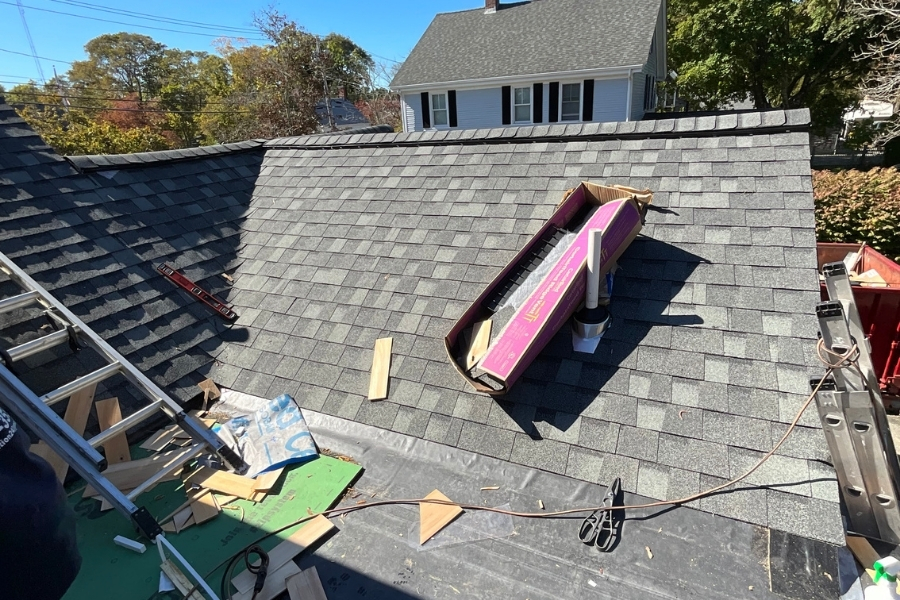
Storm damage like this often needs both emergency work and a full rebuild. The claim has to cover both.
Why Documentation Matters More After a Storm
When adjusters are stretched thin, thorough documentation is your best friend. It fills the gaps a rushed inspection leaves behind. It gives the claim the detail it needs to hold up. This is where a good restoration partner earns their keep.
Before anyone cleans up, capture the evidence. Here’s a simple checklist:
- Photograph every room and every angle before you touch anything.
- Take video too, and say out loud what you see.
- Write down the date, the storm, and when you first noticed the damage.
- Keep receipts for tarps, fans, hotel stays, and emergency spending.
Our job is to document the damage in detail and prepare a clear estimate. That estimate matches the repairs your home actually needs. We hand your insurer the information they’re looking for, so the claim moves without endless back-and-forth.
Watch Out for Storm Chasers
Big storms bring out fly-by-night contractors. They flood the area once the news trucks leave. They knock on doors, push for quick signatures, and vanish when the check clears. The same demand surge that slows your insurer is the wave they ride in on.
Real help looks different. It shows up with a license, a local address, and no pressure to sign today. We wrote a whole guide on how to spot a scammy storm chaser if you want the full rundown. Read it before you hand anyone a deposit.
How RestoreNow Helps After a Weather Disaster
We handle the whole arc of recovery, from the first frantic call to the last coat of paint. With our trusted licensed partners, we oversee emergency water extraction and drying. Then our team steps in to restore and rebuild your home at the speed of now.
We’re a family-owned, women-owned company serving Hanover, Plymouth, and the rest of the South Shore. A named storm here isn’t abstract to us. It’s our neighbors’ roofs. We document the damage, prepare the estimate, coordinate the mitigation, and carry the rebuild and reconstruction to the end.
Sorting out coverage is easier when you know what your policy spells out. Our guides to your homeowners insurance declaration page and the split between structural and contents coverage are good starting points. Homeowners across Plymouth and the coast lean on us most when the weather turns.
| Get Help Today, At The Speed Of Now |
Frequently Asked Questions
Why is my insurance company taking so long after a big storm?
After a widespread event, your insurer is handling thousands of claims at once and sorting them by severity. It often brings in out-of-state adjusters to cover the surge, which adds a wait. Good documentation on your end helps your claim move faster.
What is a named storm deductible?
It’s a separate deductible that applies only when a storm is officially named. In Massachusetts it’s usually 1% to 5% of your home’s insured value, not a flat amount. That can cost far more than your standard deductible.
Should I start cleanup before the adjuster arrives?
Photograph and video everything first. Then you can take safe emergency steps, like stopping water and covering openings. Keep damaged materials or clear photos of them. Never toss evidence before it’s recorded, since that’s what backs your claim.
Does RestoreNow talk to my insurance company for me?
We don’t negotiate your settlement or speak to your adjuster for you. What we do is document the damage and prepare a detailed estimate. Then we give you and your insurer the information needed to keep things moving.


