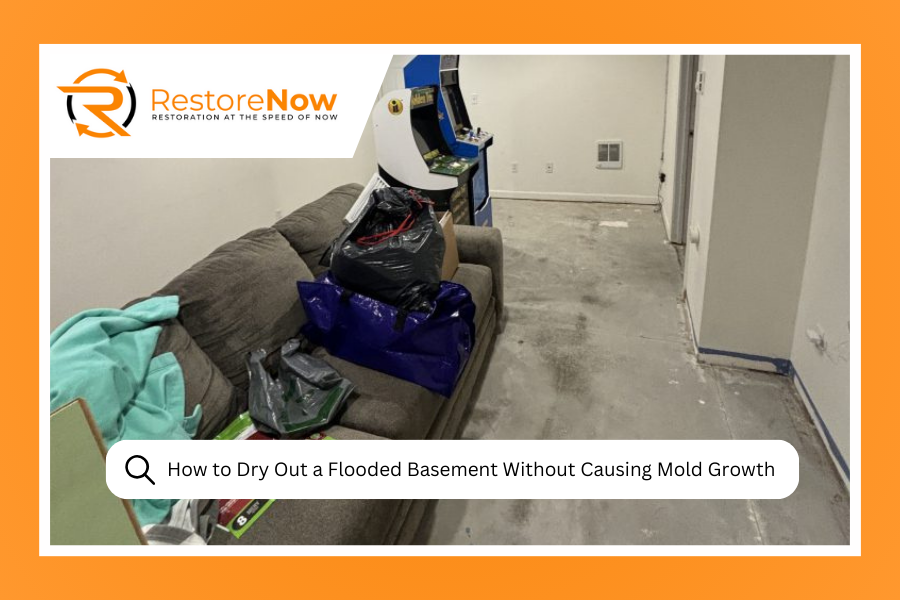
How to Dry Out a Flooded Basement Without Causing Mold Growth
Jump To:
A flooded basement can turn into a mold disaster in just 24 to 48 hours. Standing water creates perfect conditions for mold spores that damage your property and threaten your family’s health. Our RestoreNow team responds quickly because professional water removal and drying equipment makes the difference between preventing mold and dealing with a full-scale basement water damage restoration project.
Understanding professional basement drying helps you recognize why specialized equipment and expertise are essential. This isn’t a DIY situation. Here’s what to look for and why calling professionals immediately protects your home.
Basement Flooding Emergency?
With our trusted partners, we’ll oversee emergency water extraction and drying, then RestoreNow handles the structural repairs at the speed of now.
Why Timing Matters in Basement Drying
Mold spores are everywhere, dormant until they find moisture, warmth, and organic material. Your flooded basement provides all three. According to the EPA, mold begins growing on damp surfaces within 24 to 48 hours of water exposure.
Every hour counts. Drywall absorbs water like a sponge. Carpeting traps moisture against padding and subflooring. Wood framing swells and weakens. We’ve responded to winter water damage in South Shore homes where homeowners waited just two days. By then, visible mold colonies had started forming behind wall panels.
Safety First: Before You Start
Never enter a flooded basement without checking for electrical hazards. If standing water is above ankle height, call your utility company to shut off power before entering.
Check for these safety concerns:
- Electrical outlets or appliances in contact with water
- Gas lines that may be compromised
- Structural damage to walls, floors, or support beams
- Sewage contamination from backed-up drains
If you suspect sewage contamination, stop immediately. Our team coordinates with licensed partners for sewage and contaminated water situations to ensure safe remediation.
How Professional Water Removal Works
The speed of professional water removal directly impacts whether mold develops. While you might see homeowners with shop vacuums trying to tackle a flood, there’s a massive difference between what household equipment can accomplish and what professional extraction systems achieve.
Here’s what professional water removal looks like based on flooding severity:
| Water Depth | Professional Equipment Used | Extraction Timeline |
|---|---|---|
| Under 1 inch | Commercial wet vacuums, extraction wands | 2-4 hours |
| 1-3 inches | Submersible pumps, truck-mounted extractors | 4-8 hours |
| Over 3 inches | High-capacity pumps, industrial extractors | 8-24 hours |
When your sump pump fails during heavy rain, you’re dealing with serious flooding. With our trusted partners, we coordinate rapid extraction using commercial-grade pumps that remove thousands of gallons per hour, then our RestoreNow team handles the structural drying and restoration.
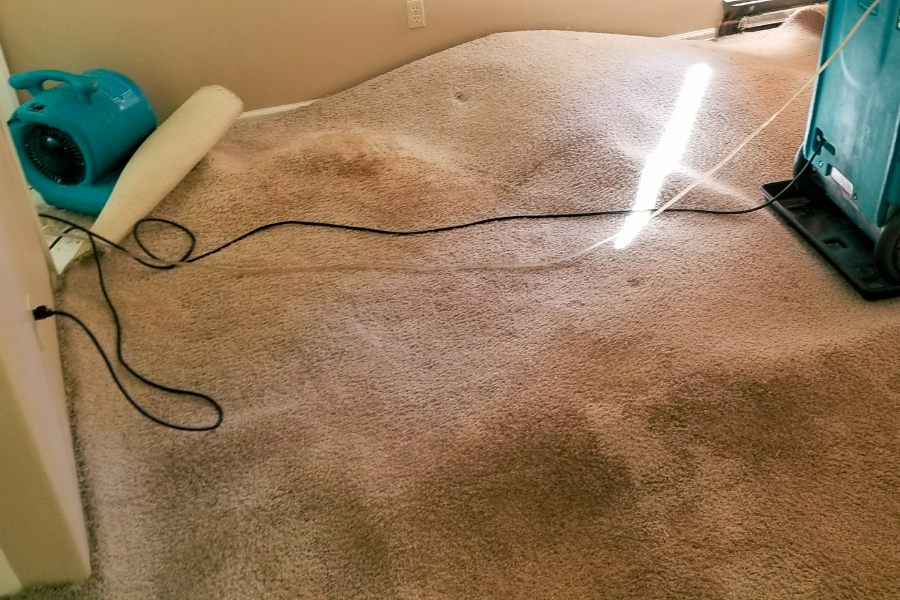
Industrial dehumidifiers and air movers create proper airflow patterns that eliminate trapped moisture from all surfaces and materials.
The Importance of Thorough Drying
Removing visible water is just the beginning. Moisture soaks deep into porous materials and hides in wall cavities. Professional drying requires specialized equipment working together.
Professional Drying Equipment
Industrial Dehumidifiers: Pull moisture from air faster than household models, dropping humidity below the 60% threshold where mold thrives.
High-Velocity Air Movers: Create airflow patterns reaching corners, under cabinets, and behind walls.
Moisture Meters: Measure hidden moisture in walls, floors, and ceilings, confirming when materials have truly dried to safe levels.
We’ve handled projects where homeowners thought their basement was dry because the floor felt dry. Moisture meters revealed 40% moisture content in the drywall, nearly double the safe level. That hidden moisture guarantees mold growth within days.
Why Professional Mold Prevention Matters
Preventing mold requires maintaining humidity below 50% throughout the drying process. This sounds simple, but achieving that level requires industrial dehumidifiers running continuously and understanding how air circulation affects different basement layouts.
Professional teams know where moisture hides. We create strategic airflow patterns that reach every corner, open closets and cabinets, and move furniture to allow proper circulation. This isn’t something household equipment can replicate.
The other critical factor: knowing what materials need removal versus what can be saved. Soaked carpeting, padding, and insulation must be discarded. Drywall saturated for more than 48 hours often needs replacement.
If you see visible mold growth larger than 10 square feet, the situation has moved beyond prevention. With our licensed environmental partners, we coordinate comprehensive mold testing and remediation. Then RestoreNow handles the structural repairs and restoration.
Why Professional Restoration Protects Your Investment
When you discover basement flooding, the clock starts ticking. Professional restoration teams bring specialized equipment and expertise in moisture detection that determines whether your basement develops long-term problems.
These situations require immediate professional response:
- Standing water of any depth (extraction speed determines mold prevention)
- Water from sewage backup or outside flooding (health hazards require proper protocols)
- Flooding that reached finished walls, ceilings, or flooring (hidden moisture spreads quickly)
- Any signs of water damage in walls or ceilings (structural concerns)
- Visible mold growth of any size (indicates moisture has been present too long)
- Basement flooding during freezing temperatures (pipe damage likely)
Hanover homeowners dealing with frozen pipe bursts or major plumbing failures benefit from our 30-60 minute response time. We coordinate emergency mitigation with trusted partners, then oversee the restoration process.
We make the insurance process easier by documenting damage, preparing estimates, and providing information your insurance company needs.
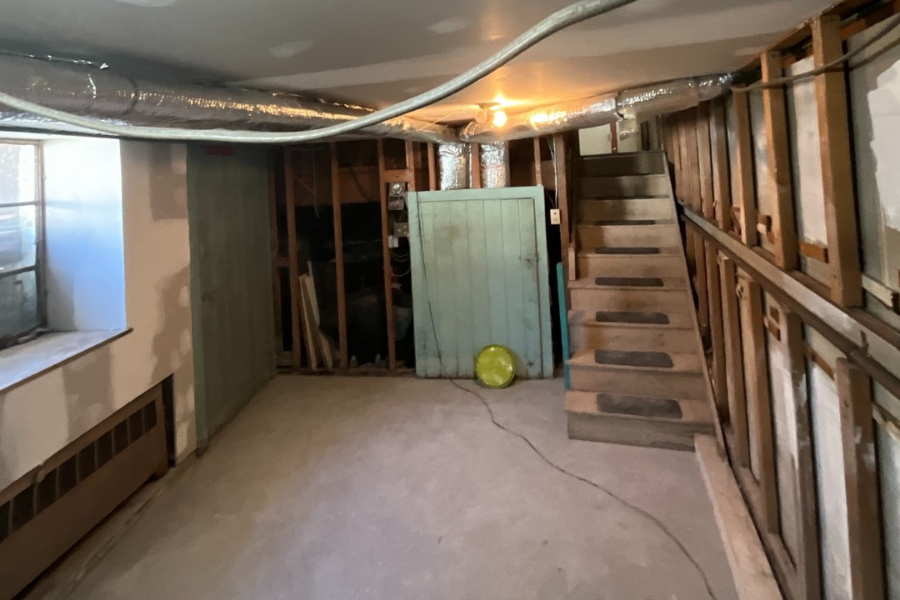
Professional restoration includes complete structural repairs, ensuring your basement looks better than before the flood.
Frequently Asked Questions
How long does it take to completely dry out a flooded basement?
Complete drying typically takes 3 to 5 days with professional equipment running continuously. Small areas might dry in 2-3 days, while extensive flooding could require 7-10 days depending on water amount, affected materials, and humidity conditions.
Can I just use fans and open windows to dry my basement?
Household fans and open windows can’t provide the air volume or moisture control needed for basement flooding. Professional air movers move 10 to 20 times more air volume than household fans and create strategic airflow patterns that reach hidden moisture. They must work alongside industrial dehumidifiers that pull massive amounts of moisture from the air. Opening windows only helps when outdoor humidity is significantly lower than indoor levels, and even then, it’s not a substitute for professional drying equipment. The difference between DIY attempts and professional drying is the difference between surface drying and complete moisture elimination.
Will bleach kill mold in my flooded basement?
Bleach kills surface mold on non-porous materials but doesn’t penetrate porous materials like drywall or wood where mold roots grow. Using bleach without controlling moisture treats the symptom, not the cause. The EPA recommends removing mold-damaged porous materials and addressing moisture sources first.
Does homeowners insurance cover basement flooding and mold damage?
Coverage depends on the flooding cause. Standard policies typically cover sudden water damage from burst pipes, water heater failures, or appliance malfunctions. They usually don’t cover flooding from outside sources, which requires separate flood insurance. Most policies cover mold remediation only if it resulted from a covered event. Read our guide on homeowners insurance coverage for water damage for details.
Basement Flood? We’re Here to Help
Our RestoreNow team serves Hanover, Marshfield, Rockland, Weymouth, and throughout the South Shore with 24/7 emergency response. With our trusted partners, we coordinate emergency water extraction and drying, then handle all structural restoration work your basement needs.
Family-owned. Locally operated. Response time: 30-60 minutes.