• Facebook
  • Instagram
  • TikTok
  • LinkedIn
  • Youtube
24/7 EMERGENCY RESPONSE: (781) 303-9930
RestoreNow
  • Home
  • Services
    • Water Damage Restoration
      • Plumbing Failures
      • Appliances Leaks
      • Bathroom Leaks
      • Kitchen Leaks
      • Ceiling Leak
    • Fire Damage Restoration
    • Storm Cleanup and Flood
    • Property Reconstruction
    • Lead Removal
    • Asbestos Removal
  • Service Area
    • Hanover
    • Middleborough
    • Plymouth
    • Braintree
    • Bridgewater
    • Providence
    • Bedford
    • Attleboro
    • Weymouth
    • Waltham
    • Framingham
    • Newton
    • Brockton
    • Worcester
    • Taunton
  • About Us
    • What We Do
    • Our Team
    • Our Partners
  • Videos
  • Testimonials
  • Recent Work
  • Learning Center
    • Blog
  • Contact Us
  • Menu Menu

Tag Archive for: water damage

Window and Door Leak Water Damage

Window and Door Leak Water Damage (Prevention and Early Repair)

August 18, 2026/in Blog, Water & Flooding/by Alexandra Ryan
Jump To:
What Is Window and Door Leak Water Damage?
Early Warning Signs You Should Never Ignore
Why Windows and Doors Leak in the First Place
A Simple Prevention Checklist for Homeowners
When to DIY and When to Call for Help
Frequently Asked Questions

Window and door leak water damage starts small and gets expensive fast. A little moisture sneaks in around a frame, soaks into the wall behind it, and by the time you notice a stain, the real trouble is already hidden inside. At RestoreNow, we handle the restoration work that follows these leaks across Hanover and the South Shore, and most of the jobs we see could have been caught earlier.

Here’s the good news. Water intrusion around openings is one of the most preventable problems in your home once you know where to look.

What Is Window and Door Leak Water Damage?

Window and door leak water damage is any moisture that enters through gaps around window and door openings, then soaks into the surrounding structure. It shows up as staining, softness, or peeling near the frame. Left alone, it spreads into drywall, framing, and insulation.

The tricky part is timing. Water rarely gushes in through a window. It seeps. A wind-driven rain pushes moisture past a worn seal, the wall soaks it up, and everything dries before you see a drop. Repeat that over a few seasons and you’ve got rot growing where you can’t see it.
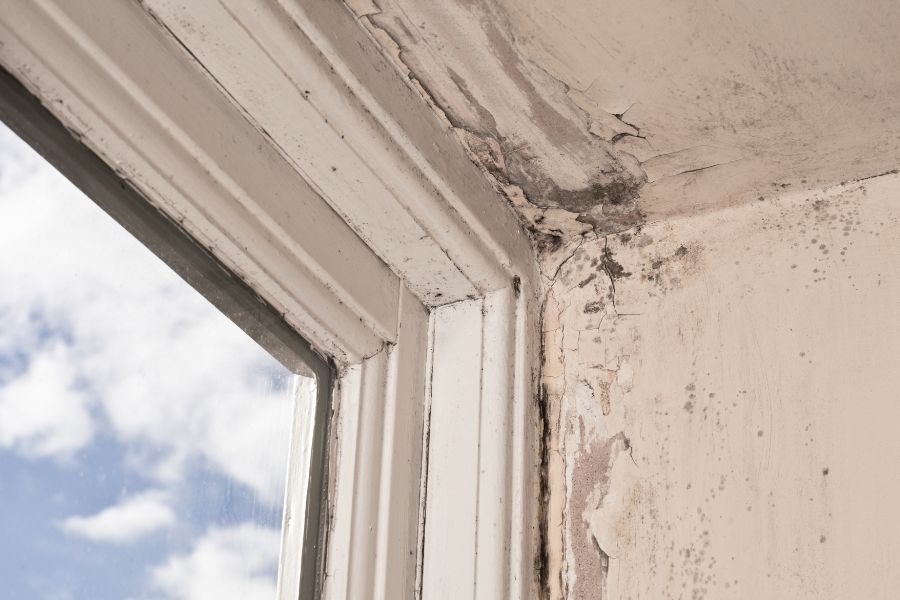
Water damage and staining on interior wall around a door frame in a residential home

Staining near a door frame is often the first visible clue that water has been getting in.

Early Warning Signs You Should Never Ignore

The earliest signs of window and door leaks are visual and easy to miss. Catch them early and you’re looking at a caulk tube and an afternoon. Miss them and you’re looking at wall repair. Walk your home once a season and check for these.

  • Discoloration or stains on the wall or ceiling near a window or door, often yellow, brown, or ringed.
  • Peeling or bubbling paint around frames, meaning moisture is trapped behind the surface.
  • Soft or spongy trim when you press the wood, a sign of rot underneath.
  • Musty smells near a window, since your nose often catches hidden moisture first.
  • Condensation between panes, which means the window’s seal has failed.
  • Cracked or missing caulk where the frame meets the siding.

If you spot mold, take it seriously. The EPA notes that mold can start growing on damp materials within a day or two, so persistent moisture is a health concern, not just a cosmetic one.

Caught something you can’t explain?

A quick look now beats a wall tear-out later. If a stain or soft spot has you worried, our team is happy to help.

Contact Our Team

Why Windows and Doors Leak in the First Place

Most window and door leaks come down to worn seals, tired caulk, or water that has nowhere good to go. Openings are the weak points in an otherwise solid wall, and here in Southeastern Massachusetts, the weather gives them a real workout.

Common causes we see on the South Shore

Wind-driven rain during a nor’easter or hurricane pushes water sideways, straight at seams that handle gentle rain just fine. The Insurance Institute for Business and Home Safety explains how wind-driven rain finds its way through small gaps around openings.

Then there’s our winters. Freeze-thaw cycles crack caulk over time, and older windows lose their seal. Failed flashing above a door lets water track down behind the trim. Clogged gutters overflow onto the windows below, which is a surprisingly common one.
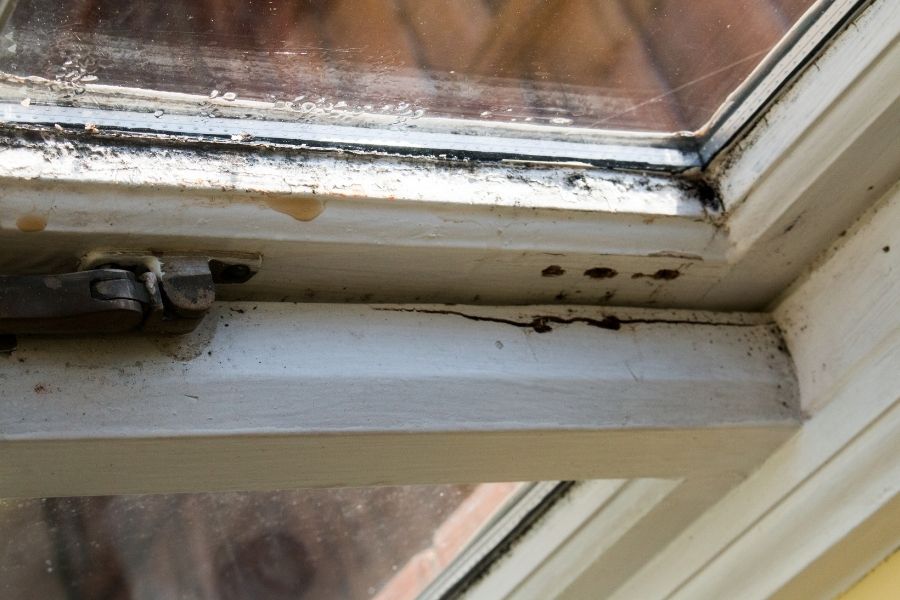
Close-up of water damage and deterioration on a residential window frame and sill

A deteriorating sill like this rarely fails overnight. It’s small leaks adding up over time.

If you’ve dealt with basement moisture too, the two often share a root cause. Our post on seven warning signs of basement water damage covers the same detective work.

A Simple Prevention Checklist for Homeowners

You can prevent most window and door leaks with routine maintenance and about an hour each season. None of it requires special skills. It just requires actually doing it, which is the hard part for all of us.

Seasonal Leak-Prevention Checklist

□ Inspect caulk around every window and exterior door. Re-caulk anything cracked or missing.

□ Check door weatherstripping and replace it if it’s flattened or torn.

□ Clear gutters and downspouts so water isn’t overflowing onto windows.

□ Look for cracked or missing flashing above doors and windows.

□ Make sure sill drainage holes on newer windows aren’t blocked.

□ Before winter, confirm seals are tight so freeze-thaw can’t loosen them.

Timing matters. Do a full pass in the fall before the cold sets in, and another in spring. Our guide to winter water damage in South Shore homes explains why the cold months are rough on seals around openings.

When to DIY and When to Call for Help

Fresh caulk and new weatherstripping are great DIY projects. Once water has been inside the wall, though, the job changes. Here’s a simple way to tell the difference.

You Can Handle It Call the Pros
Cracked exterior caulk on a dry, sound frame Soft, spongy wall or trim you can press into
Worn weatherstripping on a door Spreading stains or visible mold
Clearing a clogged gutter above a window Rot in the framing or structural wood

When the damage moves past the surface, that’s where we come in. Our team coordinates emergency drying with trusted licensed partners, then handles the property reconstruction to put your wall back together right. Since storms are usually the culprit, we also manage storm damage cleanup after a nor’easter.

We serve homeowners across the region, including water damage restoration in Plymouth and nearby towns. We’ll document the damage, prepare a detailed estimate, and give your insurance company the information it needs to move forward.

Frequently Asked Questions

How can I tell if a window leak is damaging the wall?

Press gently on the wall and trim around the window. If it feels soft, spongy, or gives at all, water has gotten behind the surface. Stains that keep returning after you paint, plus musty smells, also point to moisture inside the wall rather than on it.

Can I just caulk over a leaky window myself?

Re-caulking works well when the frame and wall behind it are dry and solid. If there’s already staining, soft wood, or mold, caulk only traps the moisture and hides the problem. That material needs to be opened up, dried, and restored before you seal anything.

Why do my windows leak only during heavy storms?

Wind-driven rain pushes water sideways and upward against seams that handle normal rain just fine. During a nor’easter or hurricane, that pressure forces moisture past worn caulk, tired seals, and failed flashing. A gap that seems harmless on a calm day becomes an open door in a storm.

Does homeowners insurance cover window and door leak damage?

It depends on the cause. Sudden storm damage is often covered, while damage from long-term neglect usually isn’t. That’s why catching leaks early matters. We document the damage thoroughly and provide the details your insurer needs to evaluate the claim fairly.

Water around your windows and doors doesn’t have to become a major project. Spot it early, seal what you can, and call for help the moment it goes deeper than the surface. When you need us, RestoreNow is here to restore your home at the speed of now.
https://restorenow.us/wp-content/uploads/2026/07/Window-and-Door-Leak-Water-Damage-.jpg 600 900 Alexandra Ryan https://restorenow.us/wp-content/uploads/2024/08/logo-800_w.png Alexandra Ryan2026-08-18 09:23:412026-07-10 06:29:38Window and Door Leak Water Damage (Prevention and Early Repair)
Storm Cleanup After Flooding in South Shore Homes

Storm Cleanup After Flooding in South Shore Homes

July 28, 2026/in Blog, Industry Insights, Water & Flooding/by Alexandra Ryan

Jump To

▶ What Storm Flooding Actually Does to Your Home
▶ First Steps After the Water Goes Down
▶ The Hidden Damage You’re Probably Missing
▶ What Gets Fixed First (and Why the Order Matters)
▶ Getting Your Insurance Claim Right
▶ FAQs

You wake up after a big storm, head downstairs, and your basement is a pond. The carpet squishes, there’s a weird smell, and you have no idea where to start. Our team at RestoreNow has walked hundreds of South Shore families through storm cleanup after flooding, and this guide covers what to do first, what can wait, and when to call the pros.

What Storm Flooding Actually Does to a South Shore Home

Here’s what nobody tells you: floodwater is nasty. It carries dirt, bacteria, sewage, and street runoff. The National Weather Service says to treat all floodwater as dirty, even if it looks clear.

Most South Shore homes have basements, and basements are floodwater magnets. Nor’easters, summer thunderstorms, random October downpours, they all push water through cracks, window wells, and busted sump pumps.

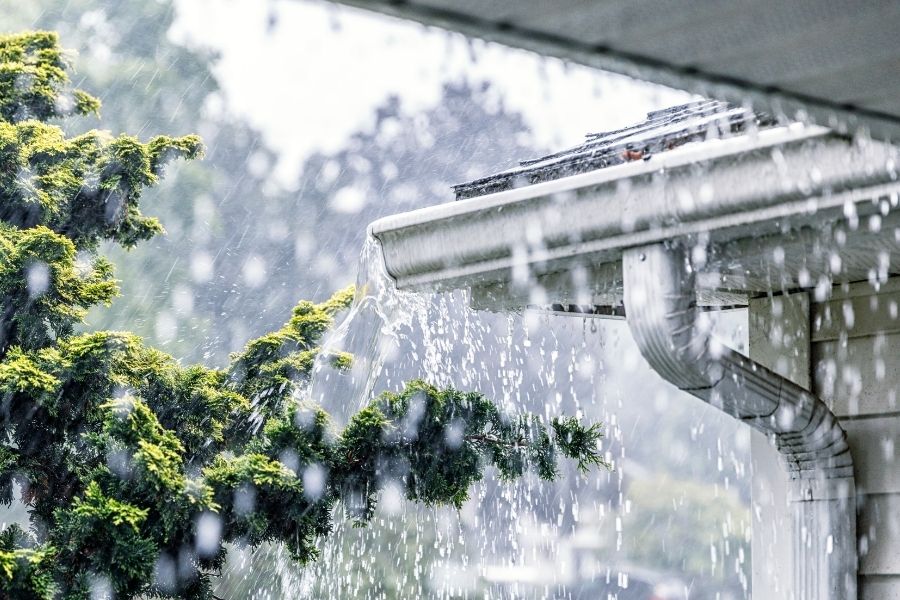
Heavy rain pounding a South Shore neighborhood during a storm

Between nor’easters, summer storms, and those surprise October soakers, South Shore homes take a beating.

The worst part? Damage doesn’t stop when the puddles dry up. Moisture creeps into framing, insulation, and drywall, and if it’s not dried out within 24 to 48 hours, mold will happily move in.

First Steps After the Water Goes Down

We get it, your instinct is to grab a mop and start cleaning. But if floodwater reached your electrical outlets, breaker panel, or appliances, stay out until an electrician gives the all-clear. Water plus electricity is not a combo you want to test.

Once the space is safe to enter, here’s the game plan:

Your Post-Storm Game Plan

☐ Get an electrician to clear any electrical hazards first

☐ Gear up: rubber boots, gloves, and a mask before you step in

☐ Document everything with photos and video before you touch anything

☐ Call your insurance company to get your claim started

☐ Pop open windows and doors for airflow (if weather cooperates)

☐ Get standing water out as quickly as you can

☐ Rescue salvageable furniture and belongings to a dry area

☐ Call a restoration company for a proper damage assessment

That documentation step is huge. Grab your phone, shoot photos from every angle, and record video describing what you see. The more detail you capture now, the smoother your insurance claim goes.

Storm Got You Stressed?

We coordinate emergency mitigation with trusted partners and handle every step of your restoration.

Get Help Now

The Hidden Damage You’re Probably Missing

OK, here’s where people get blindsided. You see the soaked carpet and stained walls and figure that’s the problem. Not quite. The visible damage is maybe half the story.

Floodwater is sneaky. It wicks up through drywall, sometimes a full foot above the waterline. It soaks insulation in wall cavities and pools under vinyl flooring where nobody notices for weeks.

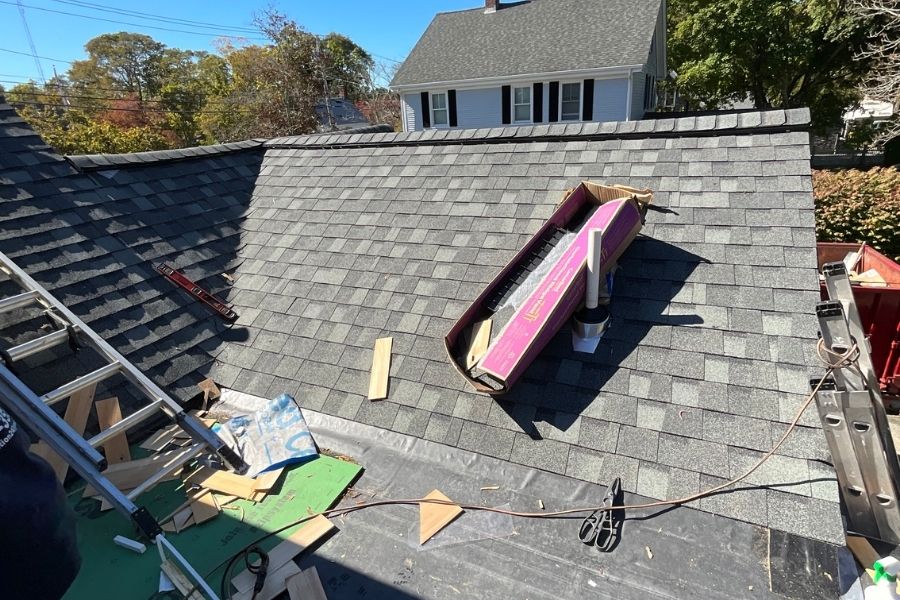
Roof damage on a South Shore home allowing rainwater in after a storm

A damaged roof can keep letting water in long after the storm passes. This is the kind of thing a professional eye catches.

This is why a pro assessment matters. Moisture meters and thermal cameras catch what your eyes can’t. Skip it, and you could pay for the same repairs twice when hidden moisture turns into mold. If you’ve dealt with heavy rain flooding in Southeastern Massachusetts before, you know the drill.

Where Storm Damage Loves to Hide

Behind Your Walls

Moisture travels up drywall and soaks insulation inside wall cavities. You won’t see it from the living room.

Under Your Floors

Water pools beneath vinyl, laminate, and hardwood. It traps moisture in the subfloor for weeks with zero visible signs.

In Crawl Spaces

Dark, damp, and out of sight. Basements and crawl spaces hold water long after storms and breed mold fast.

What Gets Fixed First (and Why the Order Matters)

Once the emergency phase wraps (water removal and drying, which RestoreNow sets up through trusted licensed partners), actual restoration starts. You can’t just skip ahead to picking new flooring. There’s a process.

Think of it like building in reverse. Strip out what’s ruined, confirm the bones are solid, then rebuild. Once everything is clean, dry, and verified, the property reconstruction begins. Here’s how it plays out:

1. Emergency water removal (through licensed partners). Water gets pulled out, drying equipment goes in, and surfaces get treated to stop bacteria.

2. Damage assessment. We walk the property with moisture meters and cameras. Everything gets documented for your insurance claim.

3. Tear-out. Drywall, insulation, flooring, anything too far gone gets removed.

4. Structural repairs. We fix or replace framing, subflooring, and anything the flood weakened.

5. Full rebuild. New drywall, flooring, paint, trim, fixtures. Goal: get your home back to where it was, or better.

How long does this take? A smaller flood in one room might wrap up in a couple weeks. A whole-basement situation takes longer. And watch out for storm chasers and fly-by-night contractors who show up promising fast, cheap fixes after big weather events.

Getting Your Insurance Claim Right

If there’s one thing that stresses people out as much as the flood itself, it’s the insurance claim. Tons of paperwork, confusing requirements, and a lot of waiting while you’re trying to keep life together.

Here’s what trips up most homeowners. Standard insurance usually covers water damage from sudden events, like rain pouring through a hole a branch punched in your roof.

But ground-level flooding is a different animal. When water rises outside and enters your home, you usually need a separate flood policy. A lot of South Shore homeowners find this gap too late.

Ready.gov recommends reviewing your coverage every year before storm season. Five minutes with your policy now can save you weeks of headaches later.

This is where the right restoration partner pays off. At RestoreNow, we document damage, build clear estimates, and give your insurer what they need to move your claim forward.

All that paperwork? We take it off your plate so you can focus on your family. For a deeper look, check out our guide on weather events and catastrophe claims.

Need Storm Restoration on the South Shore?

RestoreNow is a family-owned, women-owned company serving Hanover, Plymouth, and all of Southeastern Massachusetts.

Contact Our Team

Frequently Asked Questions

How quickly do I need to start cleanup after storm flooding?

Within 24 to 48 hours. Mold can start growing that fast once moisture sets in. The quicker drying starts, the less damage you’ll face. Call a restoration company right away, even if the water looks like it’s going down on its own.

Does my regular homeowners insurance cover storm flooding?

It depends on how water got in. Rain entering through a damaged roof or window is usually covered. Rising floodwater from outside typically needs a separate flood policy. Worth a quick call to your agent before storm season.

Can I handle storm flood cleanup on my own?

Small spills on hard surfaces like tile? Sure. But if water reached your drywall, insulation, carpet, or subfloor, call a pro. Floodwater carries bacteria that need the right gear to handle safely.

What’s the difference between mitigation and restoration?

Mitigation is the emergency response: getting water out, drying the structure, stopping things from getting worse. Restoration is the rebuild: new drywall, flooring, insulation, and everything needed to get your home back to normal. RestoreNow coordinates mitigation through licensed partners, then handles the full restoration directly.

https://restorenow.us/wp-content/uploads/2026/06/Storm-Cleanup-After-Flooding-in-South-Shore-Homes.jpg 600 900 Alexandra Ryan https://restorenow.us/wp-content/uploads/2024/08/logo-800_w.png Alexandra Ryan2026-07-28 09:50:212026-06-17 05:00:10Storm Cleanup After Flooding in South Shore Homes
Breaking Down the Lingo What Your Adjuster Isn’t Explaining

Breaking Down the Lingo: What Your Adjuster Isn’t Explaining (ACV, RCV, ALE, Deductible, Recoverable Depreciation)

July 14, 2026/in Blog, Industry Insights, Insurance & Claims/by Alexandra Ryan

Jump To:What Is Actual Cash Value (ACV)?What Is Replacement Cost Value (RCV)?ACV vs. RCV: A Side-by-Side ComparisonWhat Are Additional Living Expenses (ALE)?How Does Your Deductible Work?What Is Recoverable Depreciation?Why This Matters After Property DamageFrequently Asked Questions

If you’ve ever filed an insurance claim, you know the feeling. You’re stressed about the damage. Then your adjuster starts tossing around acronyms like ACV, RCV, and ALE. Nobody teaches you this stuff in school. For South Shore homeowners dealing with property damage, knowing this insurance lingo can save you thousands during the claims process.

What Is Actual Cash Value (ACV)?

ACV is what your damaged property is worth today. It’s not what you paid for it. Your insurer figures it out by taking the cost to replace the item and subtracting for age and wear.

Say a storm damages your 10-year-old roof. Replacing it costs $15,000. The insurer calculates $6,000 in depreciation. Your ACV payout? Just $9,000.

ACV policies carry lower premiums. But when you file a claim, that gap between your payout and real repair costs can sting.

What Is Replacement Cost Value (RCV)?

RCV covers the full amount to repair or replace your damaged property with similar materials. No depreciation is deducted. That same $15,000 roof? An RCV policy covers all of it (minus your deductible).

Here’s the catch. Most RCV policies pay in two stages. First, you get the ACV amount. After you complete repairs and submit receipts, the insurer releases the remaining money, called recoverable depreciation.

This two-step process surprises many homeowners. You won’t get a single check for the full amount right away, so plan around that when budgeting for property reconstruction.

Homeowner reviewing insurance policy documents at their kitchen table

Reading your policy language before a claim happens puts you ahead of the game.

ACV vs. RCV: A Side-by-Side Comparison

The difference comes down to depreciation. ACV deducts it. RCV does not. Here’s how the numbers play out on the same claim.

ACV Policy RCV Policy
Replacement Cost $15,000 $15,000
Depreciation Deducted $6,000 $0 (after repairs)
Deductible ($1,000) $1,000 $1,000
Your Payout $8,000 $14,000
Out-of-Pocket Gap $7,000 $1,000

That’s a $6,000 difference on the exact same damage. When you’re already dealing with unexpected property damage, that gap hits hard.

Confused by Your Insurance Claim?

RestoreNow helps South Shore homeowners with thorough damage documentation and detailed estimates. We know what insurers look for, and we make sure our scope of work matches the repairs that are actually needed.

Talk to Our Team

What Are Additional Living Expenses (ALE)?

ALE covers the extra costs of living somewhere else when your home can’t be occupied after a covered loss. You’ll find it under the “Loss of Use” section of your policy. It’s one of the most overlooked coverages until you need it.

ALE doesn’t pay your full hotel bill. It pays the gap between your normal costs and the higher costs while you’re displaced. Think extra restaurant meals, pet boarding, laundry, storage, and a longer commute.

Most policies set ALE at 20% to 30% of your dwelling coverage. If your home is insured for $300,000, that’s $60,000 to $90,000 in ALE. After a major fire damage restoration project that takes months, those costs stack up fast.

Keep every receipt. Your insurer will want proof for every ALE expense. Also check your policy for time limits. Some cap ALE at 12 months while others allow 24.

How Does Your Deductible Work?

Your deductible is what you pay out of pocket before insurance kicks in. Simple enough. But a few details trip people up, especially when you’re filing a claim for the first time.

Most homeowners carry a flat-dollar deductible between $500 and $2,500. Some policies use a percentage instead. A 2% deductible on a $400,000 home means you pay the first $8,000 out of pocket on any claim.

You might also have more than one deductible. Many Massachusetts homeowners carry a standard deductible plus a separate, higher one for wind damage. Check your declarations page to see what applies to yours.

What Is Recoverable Depreciation?

Recoverable depreciation is money your insurer holds back from your first claim check. They release it after you finish repairs. It’s money your policy owes you, but only once you prove the work is done.

Infographic showing how recoverable depreciation works in a homeowners insurance claim

Recoverable depreciation is the money your insurer holds back until you finish repairs.

Using our roof example: you get $9,000 upfront (minus your deductible). Once you finish the work and send in invoices, the insurer pays the remaining $6,000. Miss the deadline and you lose that money. Our team recently covered recoverable depreciation and like-kind replacements in more detail.

Not every policy includes this. ACV-only policies do not offer recoverable depreciation. Only RCV policies give you the chance to recover that money.

☑ Checklist: Claiming Your Recoverable Depreciation

  • Confirm your policy is RCV (check your declarations page)
  • Complete all repairs with qualified contractors
  • Keep every invoice, receipt, and proof of payment
  • Submit documentation before the deadline
  • Follow up in writing if payment doesn’t arrive within 30 days

Why This Matters After Property Damage

When you’re standing in a flooded basement or staring at fire-damaged walls, insurance jargon is the last thing on your mind. But these five terms control how much money you receive, how fast it arrives, and how quickly your home gets restored.

Homeowners who know their coverage make better decisions. They keep ALE receipts. They understand why the first check doesn’t cover the full cost. They file for recoverable depreciation before the deadline runs out.

The National Association of Insurance Commissioners (NAIC) says reviewing your policy is one of the most important steps before and after a loss. The NAIC’s homeowners insurance page also suggests you confirm each year whether your coverages are ACV or RCV.

At RestoreNow, we help homeowners across Southeastern Massachusetts with thorough damage documentation and detailed estimates. We provide the information your insurance company needs to move your claim forward. Want to learn more? Check out our guide on homeowners insurance and water damage coverage.

Understanding your policy isn’t just about reading paperwork. It’s about protecting yourself financially when something goes wrong. And if your home has already been damaged, reach out to the team at RestoreNow any time.

Frequently Asked Questions

Can I negotiate the depreciation amount on my insurance claim?

Yes. If you think the depreciation is too high, ask your insurer for the full schedule and dispute it. Receipts, maintenance records, and photos of the item before the loss all help your case.

What happens if I miss the recoverable depreciation deadline?

Your insurer won’t release that money. You’ll only keep the initial ACV payout. Deadlines vary by policy and state, so check your documents or call your insurer to confirm yours.

Does ALE coverage apply if I leave my home voluntarily during repairs?

ALE only applies when your home is uninhabitable due to a covered loss. If your home is livable but you choose to stay elsewhere for convenience, your policy likely won’t cover those costs. Your adjuster determines whether the damage makes the home unsafe.

Is my deductible applied once per year or once per claim?

Per claim. If you file two claims in one year, you pay the deductible twice. Some policies also have a separate deductible for wind or hurricane damage.

https://restorenow.us/wp-content/uploads/2026/07/Breaking-Down-the-Lingo-What-Your-Adjuster-Isnt-Explaining.jpg 600 900 Alexandra Ryan https://restorenow.us/wp-content/uploads/2024/08/logo-800_w.png Alexandra Ryan2026-07-14 09:28:462026-06-17 04:34:53Breaking Down the Lingo: What Your Adjuster Isn’t Explaining (ACV, RCV, ALE, Deductible, Recoverable Depreciation)

Tag Archive for: water damage

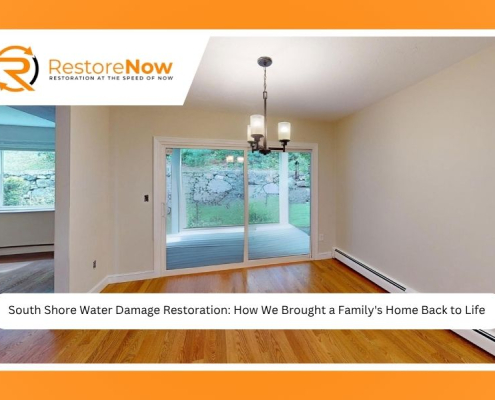
South Shore Water Damage Restoration How We Brought a Family's Home Back to Life

South Shore Water Damage Restoration: How We Brought a Family’s Home Back to Life

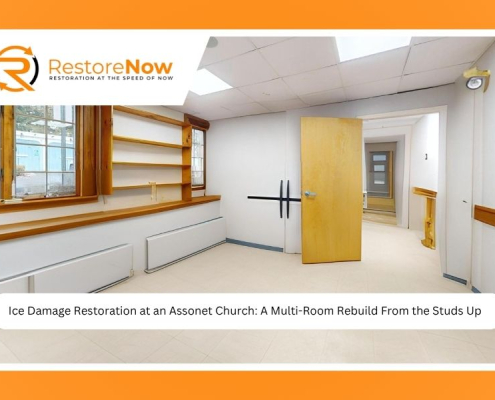
Ice Damage Restoration at an Assonet Church

Ice Damage Restoration at an Assonet Church: A Multi-Room Rebuild From the Studs Up

Alexandra

Author Alexandra Ryan

Alexandra is the owner of RestoreNow, a family-owned restoration company serving the South Shore region of Massachusetts. As an expert in restoration and reconstruction services, she specializes in coordinating comprehensive recovery solutions for water, fire, and mold damage. Her expertise in managing restoration projects from initial damage assessment through final reconstruction makes her a trusted voice in educating property owners about damage prevention, early detection, and effective restoration strategies.

Read More

Search

Categories

Contact Us

Recent Posts

  • Why You Can’t Just “Pocket the Cash” from a Claim (and When You Might Be Able To)
  • Weather Events and Catastrophic Claims: What Changes When Disaster Hits
  • Deductibles: Why You Still Owe Money After the Claim

24 Rockland St, Unit 7, Hanover, MA 02339
(781) 303-9930

Facebook
Facebook
fb-share-icon
Instagram
Tiktok
LinkedIn
Share
YouTube

We pride ourselves on restoring normalcy and peace of mind to those affected. Guided by integrity, compassion, innovation, and excellence, we pledge to deliver unsurpassed results that prioritize the satisfaction and well-being of our clients, as well as the environment.

SDO Cert Logo
Copyright © RestoreNow   |   Privacy Policy | Do Not Sell or Share My Personal Information.
  • Facebook
  • Instagram
  • TikTok
  • LinkedIn
  • Youtube
Scroll to top
Manage Consent

This site uses cookies and tracking technologies including Google Tag Manager, Google Maps, and YouTube. You can accept, reject non-essential tracking, or manage your preferences.

Functional Always active
The technical storage or access is strictly necessary for the legitimate purpose of enabling the use of a specific service explicitly requested by the subscriber or user, or for the sole purpose of carrying out the transmission of a communication over an electronic communications network.
Preferences
The technical storage or access is necessary for the legitimate purpose of storing preferences that are not requested by the subscriber or user.
Statistics
The technical storage or access that is used exclusively for statistical purposes. The technical storage or access that is used exclusively for anonymous statistical purposes. Without a subpoena, voluntary compliance on the part of your Internet Service Provider, or additional records from a third party, information stored or retrieved for this purpose alone cannot usually be used to identify you.
Marketing
The technical storage or access is required to create user profiles to send advertising, or to track the user on a website or across several websites for similar marketing purposes.
  • Manage options
  • Manage services
  • Manage {vendor_count} vendors
  • Read more about these purposes
Manage My Privacy
  • {title}
  • {title}
  • {title}